
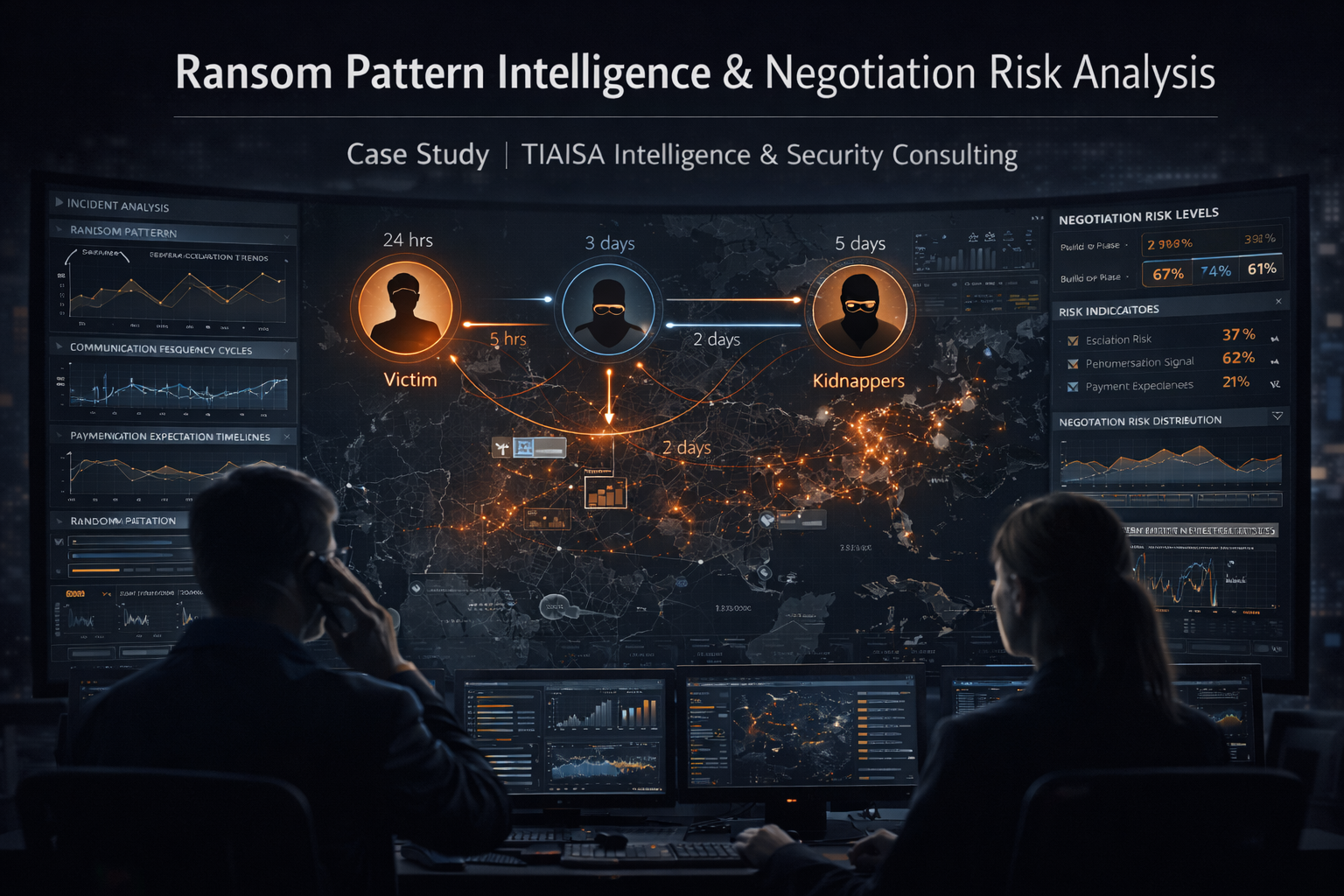
Case Study | TIAISA Intelligence & Security Consulting
Overview
Kidnapping-for-ransom incidents are rarely spontaneous. They follow structured behavioural patterns, economic incentives, and communication cycles that evolve over time. Without analytical insight, affected institutions and families are often forced to operate under extreme uncertainty and emotional pressure.
This case study illustrates how ransom pattern intelligence and risk analysis can support clearer situational understanding and informed decision-making during high-risk kidnapping incidents.
All information in this case study is anonymised and provided for intelligence illustration only.
The Challenge
An institution supporting crisis-response stakeholders faced recurring difficulties related to:
- Limited understanding of ransom demand patterns
- Inconsistent risk assessment during negotiation phases
- High emotional pressure affecting judgement
- Fragmented intelligence from previous incidents
Decision-makers required objective analytical insight, not tactical intervention.
Intelligence Objective
The intelligence objective was to develop a structured analytical framework capable of:
- Identifying behavioural cycles in ransom communications
- Assessing escalation and de-escalation risk indicators
- Supporting negotiation risk awareness
- Improving institutional preparedness for future incidents
The framework was strictly advisory and non-interventionist.
TIAISA Intelligence Framework Applied
TIAISA applied a behavioural and intelligence fusion methodology.
1. Historical Incident Analysis
Past kidnapping-for-ransom cases were reviewed to identify:
- Demand timing patterns
- Communication frequency cycles
- Payment expectation trends
- Escalation indicators
This enabled comparative pattern modeling.
2. Communication Behaviour Mapping
Non-intrusive analysis focused on:
- Message timing intervals
- Linguistic pattern shifts
- Repetition cycles
- Pressure escalation signals
No communications were intercepted or monitored in real time.
3. Risk Modelling & Human Review
AI-supported analytics were validated by human analysts to:
- Avoid over-reliance on automated predictions
- Maintain contextual sensitivity
- Prevent misinterpretation
Human judgement remained central.
Key Findings
The analysis revealed:
- Distinct negotiation phases across multiple cases
- Predictable pressure escalation cycles
- Correlation between timing irregularities and risk shifts
- Consistent behavioural markers preceding major developments
These patterns were not apparent without structured analysis.
Deliverables Provided
TIAISA delivered intelligence products including:
- Ransom Behaviour Pattern Reports
- Negotiation Risk Assessment Frameworks
- Crisis Advisory Briefings
- Preparedness Guidelines for Institutions
All outputs were advisory in nature.
Strategic Impact
The intelligence framework supported:
- More stable crisis management
- Reduced reactionary decision-making
- Improved coordination between stakeholders
- Enhanced institutional preparedness
The result was calmer, more informed crisis response.
Why This Matters
During kidnapping crises, uncertainty is often the greatest risk.
Ransom pattern intelligence helps institutions:
- Understand behavioural dynamics
- Reduce emotional volatility
- Support rational decision-making
- Improve long-term preparedness
This case demonstrates how analytical clarity improves crisis resilience.
Compliance & Ethics Note
TIAISA does not engage in ransom negotiation, payment facilitation, or operational intervention.
This case study describes analytical and advisory support only, conducted under strict ethical and legal frameworks.
Leave a Reply